
acuvue oasys multifocal fitting guide
Acuvue Oasys Multifocal Fitting Guide: A Comprehensive Overview (04/07/2026)
This guide details a three-step process for successful Acuvue Multifocal fittings, encompassing subjective refraction, ocular dominance, and precise parameter selection․
Acuvue Oasys Multifocal lenses represent a significant advancement in presbyopia correction, offering a comfortable and high-performing solution for individuals experiencing age-related vision changes․ These lenses utilize a unique optical design, consistent across all Acuvue Multifocal varieties, to provide seamless vision at distance, intermediate, and near․
Johnson & Johnson’s Acuvue brand is globally recognized for quality and innovation in contact lens technology․ The Oasys Multifocal specifically addresses the challenges of multifocal fitting with an extensive range – boasting 100 parameters tailored to diverse pupil sizes and refractive errors․ Successful fitting relies on understanding these parameters and employing a systematic approach, acknowledging that individual needs vary greatly․
Understanding Presbyopia and Multifocal Contact Lenses
Presbyopia, the age-related loss of near focusing ability, impacts nearly everyone over 40, necessitating vision correction for tasks like reading and computer use․ Unlike refractive errors corrected with single-vision lenses, presbyopia requires solutions addressing multiple focal distances․ Multifocal contact lenses, like Acuvue Oasys Multifocal, achieve this by incorporating different power zones within the lens․
These zones provide clear vision at distance, intermediate, and near, often utilizing concentric rings or segmented designs․ Successful multifocal lens fitting is notably complex, demanding careful consideration of patient needs and a willingness to refine the prescription․ It’s crucial to remember that what works optimally for one patient may not suit another, highlighting the nuance of this fitting process․

Patient Assessment & Initial Considerations
Thorough patient history, detailed refraction, and precise pupil size measurement are vital first steps for successful Acuvue Oasys Multifocal lens fittings․
Comprehensive Patient History
A detailed patient history is paramount before initiating an Acuvue Oasys Multifocal fitting․ This includes a thorough understanding of the patient’s visual demands – near, intermediate, and distance activities – and their typical working distances․
Crucially, ascertain the duration of presbyopia and any previous contact lens wear, including successes and failures with prior multifocal designs․ Investigate any ocular surface disease, allergies, or systemic conditions that might impact lens comfort or fit․
Specifically inquire about visual complaints, such as haloes, glare, or difficulty with specific tasks․ Understanding the patient’s lifestyle and expectations will significantly contribute to a successful fitting and improved visual experience․
Refraction Techniques for Presbyopes
Refracting presbyopic patients requires a nuanced approach beyond standard techniques․ Begin with a thorough distance refraction, followed by a monocular near addition assessment․ Dynamic retinoscopy can be invaluable, particularly for fluctuating accommodation․
Employ techniques like the +2․50 rule to estimate near addition, but always verify subjectively․ Consider incorporating a binocular balancing procedure to optimize both distance and near vision․
Carefully assess intermediate vision, as this is often a challenge for multifocal lens wearers․ Utilize trial frames with progressive addition lenses to simulate the multifocal experience and refine the prescription before contact lens fitting․
Pupil Size Measurement & Its Importance
Accurate pupil size measurement is crucial for Acuvue Oasys Multifocal success, as these lenses feature 100 parameters tailored to pupil variations․ Measure under both photopic (bright light) and mesopic (intermediate light) conditions, as pupil size changes significantly․
Larger pupils may require lower add powers, while smaller pupils may benefit from higher additions․ Utilize a pupillometer for precise measurements; estimations can be unreliable․
Consider the patient’s age and refraction, as these factors influence pupil size․ Document pupil size meticulously, as it directly impacts lens selection and overall visual performance․

Fitting Process: Step-by-Step Guide
The fitting process involves a detailed subjective refraction, determining ocular dominance, and carefully selecting lens parameters to optimize vision correction․
Step 1: Subjective Refraction
Initiate the fitting with a thorough subjective refraction, meticulously assessing both distance and near visual acuity․ Refine the initial refraction using trial lenses, carefully evaluating patient responses to pinpoint the optimal correction․ This crucial step establishes the foundation for successful multifocal lens fitting․
Pay close attention to patient feedback regarding clarity at various distances․ Utilize a well-lit room and standardized testing charts․ Consider incorporating plus and minus additions during the refinement process to accurately determine the appropriate add power․ Remember, achieving optimal visual acuity requires patience and precise adjustments based on individual patient needs and responses․
Distance & Near Visual Acuity Assessment
Begin by establishing best-corrected distance visual acuity (BCDVA) using a standard Snellen chart․ Subsequently, assess near visual acuity (NVA) at a comfortable reading distance, typically 40cm, employing appropriate near addition charts․ Document both monocular and binocular acuity measurements meticulously․
Compare distance and near acuity to identify any discrepancies․ Note any patient complaints of blur, haloes, or glare during this initial assessment․ This comparative analysis provides valuable insights into the patient’s refractive error and presbyopic needs, guiding subsequent refraction refinement and lens selection․ Accurate baseline measurements are paramount for a successful fitting․
Refinement of Refraction with Trial Lenses
Utilize a diagnostic lens set to refine the initial refraction, systematically altering power and addition․ Begin with a spherical power refinement, then introduce cylindrical correction if astigmatism is present; Evaluate binocular acuity at both distance and near, asking the patient to compare vision with and without correction․
Pay close attention to patient feedback regarding clarity, comfort, and any visual disturbances․ Small adjustments to the add power can significantly impact near vision performance․ Repeat this process iteratively, documenting each change and the corresponding visual response․ The goal is to achieve optimal vision at all distances while minimizing complaints․
Step 2: Determine Ocular Dominance
Accurately establishing ocular dominance is crucial for successful multifocal lens fitting, influencing add power distribution and overall visual balance․ Several methods can be employed, including the hole-peg test or cover-uncover testing while observing for refixation movements․
Consistent results across multiple tests are ideal․ Knowing which eye leads for distance versus near tasks informs lens parameter selection․ Dominance can shift slightly between individuals, so careful observation is key․ Document the determined ocular dominance clearly, as it will guide subsequent fitting decisions and potentially influence monovision strategies․
Step 3: Lens Selection & Parameter Fitting
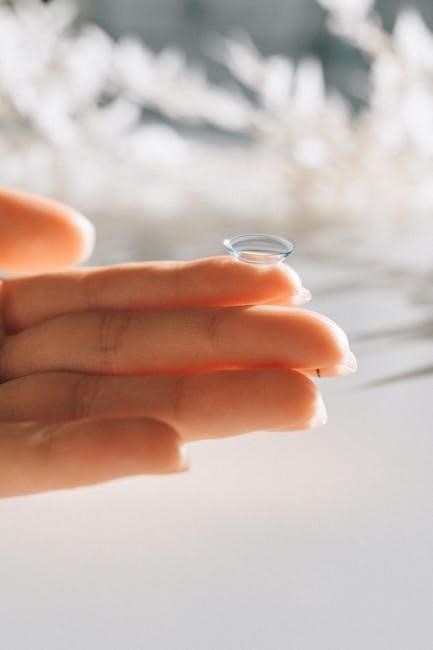
Precise parameter selection is paramount for Acuvue Oasys Multifocal success, considering base curve, power, and diameter․ Begin with base curves aligning with the patient’s established corneal curvature․ Distance power should correct refractive error, while add power targets the desired near correction, often starting with +1․50D and refining․
Diameter selection impacts comfort and lens centration; standard diameters usually suffice․ Utilize diagnostic sets to evaluate multiple parameters simultaneously․ Remember 100 parameters are tailored to pupil size variations․ The unique optical design is consistent across all Acuvue Multifocal lenses, simplifying the process․
Base Curve Selection
Initial base curve selection should closely align with the patient’s established corneal curvature, as determined by keratometry or corneal topography․ A well-matched base curve ensures optimal lens-to-cornea fit, promoting comfort and minimizing complications․ Consider slightly steeper curves for plus prescriptions and flatter curves for minus prescriptions, but prioritize corneal shape․
Diagnostic fitting sets are invaluable for refining base curve selection․ Evaluate lens movement and centration; excessive movement suggests a flatter base curve is needed, while binding indicates a steeper one․ Remember, proper base curve selection is foundational for successful multifocal lens adaptation and visual acuity․
Power Selection: Distance & Add Power
Begin with the patient’s existing distance prescription, refined through subjective refraction․ Accurately determining the add power is crucial for near vision correction; start with the patient’s reported add or, if unavailable, a +1․50D to +2․00D estimate․ Utilize a binocular add power determination technique for optimal results․
Fine-tune the add power in 0․50D increments, monitoring visual acuity at intermediate and near distances․ Consider the patient’s lifestyle and visual demands when finalizing the add power․ Remember, a precise balance between distance and add power is essential for comfortable, clear vision at all focal lengths․
Diameter Considerations
Acuvue Oasys Multifocal lenses are primarily available in a standard diameter of 14․5 mm, suitable for most corneas․ However, careful assessment is vital, particularly for patients with larger or smaller corneal diameters․ Ensure adequate coverage of the cornea without excessive blink-induced movement or tight lens adhesion․

Observe the lens centration during the fitting process; decentration can indicate an improper diameter․ If edge lift or corneal staining is observed, consider a slightly larger diameter․ Conversely, if the lens feels tight or causes discomfort, a smaller diameter might be more appropriate․ Prioritize patient comfort and corneal health when selecting the optimal lens diameter․

Acuvue Oasys Multifocal Lens Parameters

Acuvue Oasys Multifocal offers a wide range of parameters, including powers and additions, designed to address diverse presbyopic needs and prescriptions․
Available Powers and Additions
Acuvue Oasys Multifocal lenses boast an extensive parameter range, catering to a broad spectrum of prescriptions․ Distance powers are available from +0․50D to +8․00D in 0․25D steps, ensuring precise vision correction for a diverse patient base․ Furthermore, the lenses offer a comprehensive selection of addition powers, ranging from +0․75D to +3․00D, also in 0․25D increments․
This granular control over addition power allows for highly customized fittings, optimizing both distance and near vision clarity․ The availability of 100 parameters tailored to pupil size variations across age and refraction further enhances fitting success․ These parameters are consistent across all Acuvue Multifocal contact lenses, simplifying the fitting process and ensuring predictable results․
Cylinder Availability & Axis Considerations
Acuvue Oasys Multifocal lenses address astigmatism with a robust cylinder offering, ranging from -0․75D to -2․25D in 0․25D steps․ This broad range allows for effective correction of mild to moderate astigmatism alongside presbyopia․ Axis orientation is crucial for optimal visual acuity and comfort; lenses are available in 10-degree increments, ensuring precise alignment with the patient’s corneal curvature․
Careful consideration of the axis is paramount during fitting, particularly when dealing with irregular astigmatism or significant cylinder power․ Proper axis alignment minimizes distortion and maximizes visual performance․ The unique optical design maintains consistent performance across all parameters, including cylinder corrections, simplifying the fitting process and enhancing patient satisfaction․
Lens Material & Design Features
Acuvue Oasys Multifocal lenses are crafted from Senofilcon A, a highly breathable silicone hydrogel material, ensuring exceptional oxygen permeability for healthy, comfortable wear․ The Hydraclear Plus Technology maintains consistent moisture throughout the day, minimizing dryness and irritation․ These lenses feature Intuitiv Presbyopia Correction, a unique design with seamless transitions between distance, intermediate, and near vision zones․
This innovative design incorporates a unique optical fingerprint, tailored to individual pupil size variations, optimizing visual performance across all prescriptions․ The lens maintains a consistent design across all parameters, simplifying fitting and providing predictable results․ UV blocking capabilities further protect the eyes from harmful radiation, enhancing overall eye health;

Troubleshooting Common Fitting Challenges
Addressing haloes, glare, intermediate vision issues, or distance blur requires careful refraction refinement and parameter adjustments for optimal Acuvue Oasys Multifocal performance․
Complaints of Haloes or Glare
Haloes and glare reported by patients often indicate an improper lens fit or refractive error․ Initial steps involve verifying the refraction, particularly add power, and ensuring accurate lens centration․ Consider reducing the add power slightly, as excessive addition can exacerbate these symptoms․ Evaluate pupil size; larger pupils may experience more light scatter, contributing to haloes․
Adjusting the base curve can also be beneficial, as a steeper or flatter curve might improve lens positioning and reduce optical aberrations․ Diagnostic lens sets are invaluable for pinpointing the optimal parameters․ Furthermore, assess the patient’s corneal health and tear film quality, as dryness or irregularities can worsen visual disturbances․ Thoroughly investigate these factors to provide a comfortable and clear vision experience․
Issues with Intermediate Vision
Difficulty with intermediate vision frequently arises in multifocal contact lens fittings, demanding careful assessment and adjustment․ Begin by confirming the patient’s typical intermediate distance needs – computer screens, reading arms length, etc; – and refine the add power accordingly․ A slight increase in add power may improve near and intermediate clarity, but avoid over-plus, which can compromise distance vision․
Consider modifying the lens design; some patients benefit from a different add distribution or zone size․ Monovision or modified monovision strategies can also be explored if a compromise is necessary․ Diagnostic sets are crucial for fine-tuning the intermediate vision, allowing for precise power adjustments․ Evaluate tear film and ocular surface health, as dryness impacts visual performance․
Addressing Distance Vision Blur
Distance vision blur with Acuvue Oasys Multifocal lenses often indicates an issue with the distance power or add power balance․ Begin by re-verifying the distance refraction, ensuring accurate correction․ A slight reduction in add power can frequently improve distance acuity without significantly impacting near vision․ However, avoid under-minusing, which can induce eye strain․
Assess pupil size, as it influences the proportion of distance versus near power utilized․ Larger pupils may require adjustments to the lens design or power․ Diagnostic sets are invaluable for pinpointing the optimal power combination․ Consider the patient’s lighting conditions; reduced light can exacerbate distance blur․ Thoroughly evaluate tear film quality, as dryness can contribute to fluctuating vision․

Advanced Fitting Techniques
Monovision and modified monovision strategies, alongside diagnostic lens sets, refine astigmatism correction, optimizing visual acuity and patient comfort with Acuvue Oasys․
Monovision & Modified Monovision Strategies
Monovision involves prescribing a distance correction in one eye and a near correction in the other, leveraging the brain’s neuroplasticity to adapt․ Modified monovision offers a compromise, providing intermediate vision in both eyes while still prioritizing distance in the dominant eye․
Careful consideration of patient lifestyle is crucial; active drivers may benefit from more distance focus, while those prioritizing near work might favor a modified approach․ Thorough patient counseling regarding potential trade-offs, such as reduced binocularity and depth perception, is essential․
Acuvue Oasys Multifocal lenses can be utilized within these strategies, often requiring a careful balance of add power and lens parameters to achieve optimal visual outcomes and patient satisfaction․
Utilizing Diagnostic Sets
Diagnostic sets are invaluable tools for Acuvue Oasys Multifocal fittings, allowing practitioners to efficiently evaluate multiple parameters and powers without repeated ordering․ These sets typically include a range of add powers and base curves, facilitating a streamlined subjective refraction process․
Begin by selecting a set encompassing the anticipated power range based on the patient’s refraction․ Systematically evaluate different combinations, focusing on clarity at all distances – far, intermediate, and near – while monitoring for haloes or glare․
Careful documentation of each trial lens combination and the patient’s subjective response is crucial for informed decision-making and achieving optimal visual correction․
Fitting Considerations for Astigmatism
When fitting Acuvue Oasys Multifocal lenses on astigmatic patients, a thorough understanding of their corneal topography and astigmatism axis is paramount․ The Acuvue Oasys 1-Day for Astigmatism Multifocal offers specific parameters to address both presbyopia and astigmatism simultaneously․
Carefully assess the amount and regularity of astigmatism․ Diagnostic fitting sets are particularly useful, allowing evaluation of different toric powers and axes to minimize residual astigmatism and maximize visual acuity․
Consider the potential for rotation and ensure stable lens positioning for optimal performance and patient comfort․

Post-Fitting Evaluation & Follow-Up
Evaluate lens wear, gather patient feedback, and refine adjustments based on the trial wear experience for long-term success and comfort․
Lens Wear Evaluation & Patient Feedback
Thoroughly assess the patient’s experience during the trial period․ Inquire about visual clarity at all distances – far, intermediate, and near – noting any reported fluctuations․
Specifically, ask about comfort levels throughout the day, dryness, or any sensation of foreign body presence․ Detailed questioning regarding haloes, glare, or distortions is crucial․
Encourage patients to describe their daily activities and how the lenses perform in real-world scenarios, such as reading, computer use, and driving․
Record all subjective responses meticulously, as this feedback will directly inform subsequent refinement adjustments and ensure optimal patient satisfaction with the Acuvue Oasys Multifocal lenses․
Refinement Adjustments Based on Wear Trial
Based on patient feedback, adjustments to lens parameters are often necessary․ If distance vision is blurred, consider slightly reducing the add power or adjusting the distance power․
For intermediate vision issues, a small increase in add power or a change in lens diameter might be beneficial․ Haloes or glare often indicate an incorrect add power or base curve, requiring careful modification․
Diagnostic sets are invaluable for pinpointing optimal parameters efficiently․
Remember, multifocal fittings are nuanced; small changes can yield significant improvements․ Document all adjustments and repeat the wear trial to validate the effectiveness of each refinement․
Long-Term Management & Follow-Up Schedule
Consistent follow-up is crucial for sustained success with Acuvue Oasys Multifocal lenses․ Schedule an initial follow-up visit two to four weeks post-fitting to assess lens adaptation and address any emerging concerns․
Subsequent evaluations should occur at six months and annually to monitor vision stability and ocular health․
Educate patients about proper lens care and hygiene to minimize complications․
Regularly reassess visual needs, as presbyopia progresses․
Document all findings and adjustments meticulously to track long-term outcomes and optimize patient care․
Related Posts

paroles chants de noël pdf
Téléchargez gratuitement les paroles des chants de Noël en PDF. Découvrez une collection de chants traditionnels pour célébrer Noël avec famille et amis.

examen professionnel oiq exemple pdf
Struggling with the OIQ professional exam? Get your hands on our PDF examples and conquer that test! Your engineering career in Canada starts here!