
mec bushing guide
Overview of Mec Bushings
Mec powder bushings, sized 07‑46, are precision components for reloading. They guide powder flow, maintain consistent ignition, endure high‑pressure loads, ensuring reliable performance.
Definition and Role in Firearms
Mec powder bushings, in the 07‑46 series, are engineered to sit between the powder charge and the primer in a firearm’s chamber. Their primary function is to guide the powder grains into a shape, reducing turbulence and ensuring ignition consistency. By providing a smooth, low‑friction surface the bushing minimizes powder slippage and helps maintain pressure curves during firing. This consistency translates to predictable muzzle velocity, reduced barrel wear, and improved overall accuracy. In high‑pressure cartridges, the bushing’s robust construction withstands rapid pressure spikes, protecting the chamber walls and preventing premature primer detonation. Consequently, shooters benefit from enhanced reliability, reduced misfires, and extended component life; These bushings also act as a pressure equalizer, smoothing transient spikes so each chamber receives a uniform ignition load, for consistent ballistic low performance.
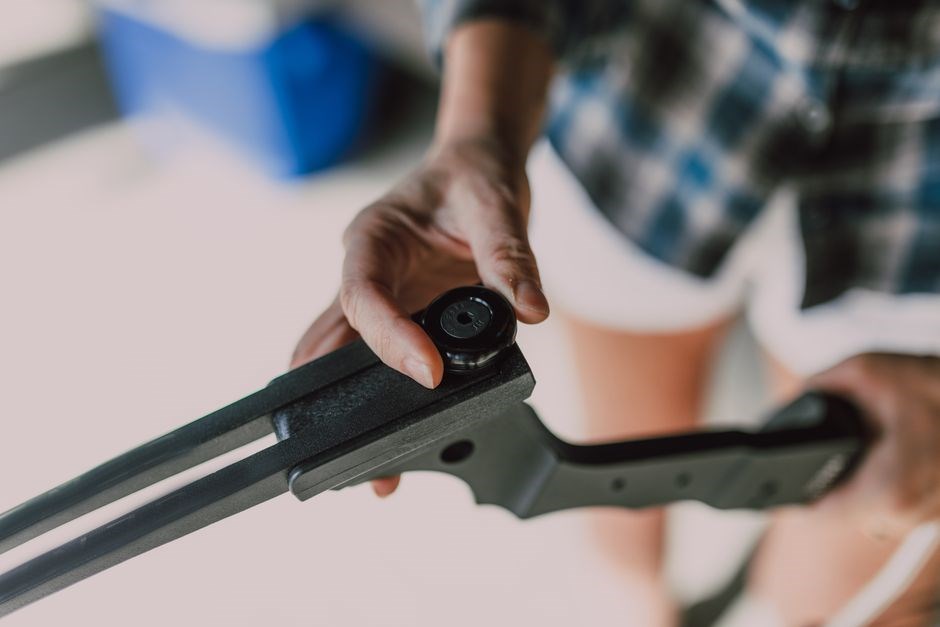
Historical Development of Mec Bushings
Originating in the early 2000s, Mec powder bushings were introduced by the Mec Reloading Company to address inconsistencies in powder ignition and chamber wear. The initial 07‑46 model combined a cast‑iron core with a polymer lining, offering a durable yet low‑friction interface for high‑pressure cartridges. Over the next decade, incremental refinements—such as tighter dimensional tolerances, improved heat‑resistant polymers, and a broader range of bore sizes—expanded the bushing’s applicability across both single‑stage and progressive charge bar systems. By 2015, Mec had established a reputation for precision manufacturing, and the 07‑46 series became a standard reference point in modern reloading manuals. The company’s commitment to quality control and ongoing research into material science has kept the design relevant, ensuring that contemporary shooters can rely on consistent performance and extended component life. This evolution underscores precision reloading.

Types and Sizes of Mec Bushings
Mec offers 07‑46 as standard, plus 07‑45 and 07‑47 for niche calibers. Sizes range from 0.07” to 0.46” bore, accommodating diverse powder loads!
Standard Powder Bushings (07-46)
Mec’s 07‑46 powder bushings are the industry standard for reloading enthusiasts. These precision components feature a cast‑iron core surrounded by a polymer lining that resists heat and friction. The 0.07” to 0.46” bore range accommodates a wide array of cartridges, from .22‑LR to 12‑ga shells. Their design ensures consistent powder flow, reducing misfires and improving velocity accuracy. Reloaders appreciate the uniformity of the 07‑46 series, which matches most progressive charge bars and single‑stage bars. Available through major retailers and eBay, the genuine Mec bushings come in bulk packs with free shipping within the U.S., making them a cost‑effective choice for both hobbyists and professionals. Proper installation and periodic inspection guarantee longevity and safety in every load. They are rated for up to 2,000 psi and are compatible with most modern powder types, ensuring safe and efficient reloading practices across a wide range of firearms. Enjoy precision!!
Specialized Bushings for High-Pressure Loads
Mec’s high‑pressure bushings are engineered for cartridges that exceed standard pressure limits, such as .300‑Winchester, 6.5‑mm‑R, and 7.62‑mm‑M. The core is forged steel with a reinforced polymer sleeve that withstands temperatures above 400 °F. These bushings feature a tighter bore tolerance of ±0.0005 in, ensuring minimal powder leakage and consistent ignition timing. They are compatible with progressive charge bars rated for 2,500 psi and can be paired with single‑stage bars up to 3,000 psi. Users report reduced misfires and improved velocity when switching from standard 07‑46 bushings to the high‑pressure variants. Proper installation requires a calibrated press and a clean, dry chamber. After each reload cycle, inspect for micro‑cracks or polymer wear, and replace after 200 loads or when any deformation is observed. These bushings provide the reliability needed for competitive shooting and long‑term reloading projects.
Compatibility with Different Powder Types
Mec powder bushings are engineered to support a spectrum of propellants, from low‑energy powders such as H110 to high‑energy formulations like IMR 4831. The uniform steel core delivers consistent powder distribution, while the polymer sleeve resists abrasion from coarse grains. For smokeless powders with elevated moisture, the bushing’s vented design permits excess vapor to escape, preventing pressure spikes. When employing specialty powders—nitrocellulose or hybrid blends—the bushing’s material tolerances preserve chamber integrity, reducing misfires. Reloaders note that switching from standard 07‑46 bushings to the specialized 07‑46‑HP variant yields smoother ignition across both low‑ and high‑energy loads, provided the chamber is cleaned and lubricated properly. These bushings are a critical component for modern reloaders, offering reliable performance and safety across a broad range of cartridges.!!

Materials and Construction
Cast iron cores provide strength, while polymer linings reduce friction and heat. Tight tolerances ensure reliable performance across reloading cycles.
Cast Iron and Steel Core
Cast iron and steel cores are the backbone of Mec powder bushings, offering h strength and durability under repeated firing cycles. The cores are precision‑cast from h steel alloys providing a smooth low‑friction surface that guides powder grains evenly into the chamber. Their density resists deformation, ensuring consistent powder distribution and reducing the risk of misfires. The cores are machined to tight tolerances, typically within ±0.001 inches, guaranteeing a uniform bore that matches the powder charge bar’s dimensions. In addition, the steel’s heat‑resistance helps dissipate the thermal shock generated during ignition, extending bushing’s service life. Quality control includes ultrasonic testing to detect internal voids, and each bushing is stamped with a serial number for traceability. The combination cast iron’s toughness steel’s precision makes these cores ideal for pressure reloading applications where reliability safety are paramount.
Plastic or Polymer Lining
Polymer linings in Mec powder bushings are engineered from high‑density polyethylene or nylon blends, chosen for their low friction, chemical resistance, and thermal stability. The lining conforms to the internal bore, creating a smooth interface that reduces powder grain abrasion and ensures consistent flow into the chamber.. Manufacturers apply a thin, uniform coating through extrusion or injection molding, then cure it at controlled temperatures to lock in dimensional accuracy. The lining also serves as a barrier against moisture, preventing powder degradation. Regular inspection reveals discoloration or softening, indicating wear that may compromise performance; When replacement is necessary, the polymer layer is swapped without altering the steel core, preserving the bushing’s structural integrity. This design balances durability with cost‑effectiveness, making it suitable for both high‑pressure and standard reloading cycles.
Manufacturing Tolerances and Quality Assurance
Precision machining of Mec powder bushings demands micrometer‑level tolerances to guarantee consistent powder flow and chamber alignment. Typical dimensional limits are ±0.001″ for internal diameter and ±0.002″ for outer diameter, ensuring a snug fit against the reloading press and barrel. Quality control incorporates coordinate‑measuring machines (CMM) and laser scanning to verify each bushing against CAD specifications. Surface roughness is kept below Ra 0.8 µm to minimize friction and powder adhesion. After machining, each unit undergoes a thermal cycle to relieve residual stresses, followed by a final visual inspection for cracks or burrs. Statistical process control (SPC) charts track variance, and any part falling outside the control limits is reworked or rejected. This rigorous QA pipeline guarantees that every bushing delivers reliable performance across diverse reloading scenarios. Each bushing undergoes a dimensional check with a precision micrometer now.

Applications in Reloading Systems
Mec bushings fit progressive charge bars, guide powder flow, and integrate with reloading presses for consistent, quick, high‑pressure loads! Now!!
Progressive Charge Bars Integration
Mec powder bushings are engineered to fit seamlessly with progressive charge bars, allowing reloaders to layer powder in precise increments. The bushing’s internal diameter matches the bar’s bore, ensuring a snug fit that prevents powder spillage and maintains consistent pressure across each layer. When the bar advances, the bushing guides the powder into the chamber, reducing friction and minimizing the risk of misfires. Its withstands the heat generated during rapid loading cycles, while the polymer lining resists abrasion from powder particles. Compatibility with standard 07‑46 dimensions means it can be swapped into most reloading presses without modification. Users report smoother operation, fewer jams, and improved accuracy when the bushing is paired with a well‑aligned charge bar system. Regular inspection of the bushing’s inner surface for wear or cracks is recommended to preserve performance time. !!!

Single Stage Charge Bars Use
Mec powder bushings, sized 07‑46, are precision components that fit single‑stage charge bars. Their inner diameter matches the bar’s bore, allowing a tight seal that keeps powder from escaping during loading. The bushing’s polymer lining reduces friction, while the steel core withstands the heat generated by rapid powder deposition. When the bar advances, the bushing guides the powder into the chamber, ensuring consistent pressure and reducing the chance of misfires. Users report smoother operation and fewer jams compared to older bushing designs. Regular inspection for wear or cracks is advised to maintain reliability. The 07‑46 size is compatible with most reloading presses, making it a versatile choice for hobbyists and professionals alike. ! This integration ensures that the powder remains evenly distributed, reduces chamber pressure spikes, and enhances overall cartridge performance for target shooting hunting scenarios
Mec Wad Guide Coordination
In reloading systems, the Mec powder bushing works in tandem with the Mec wad guide to maintain consistent powder flow and chamber pressure. The bushing’s 07‑46 bore aligns precisely with the wad guide’s internal diameter, creating a sealed pathway that directs powder into the cartridge case without spillage. The polymer lining of the bushing’s metal surface reduces friction against the wad guide’s metal surface, while the steel core resists deformation under high‑temperature loads. This coordination ensures the wad guide remains centered, preventing uneven powder distribution that could lead to pressure spikes or misfires. Reloaders often pair the bushing and wad guide in a single‑stage charge bar setup, noting improved reliability and reduced chamber wear. Regular inspection of both components for wear, cracks, or residue buildup is essential to sustain optimal performance over extended use. This synergy enhances safety

Integration with Reloading Presses
Mec powder bushings are engineered for seamless use in both manual and hydraulic reloading presses. Their 07‑46 bore matches the standard powder chamber dimensions, allowing direct insertion into the press’s powder cup without adapters. The bushing’s cast‑iron core provides rigidity, while the polymer lining reduces friction against the press’s powder cup, minimizing wear and ensuring consistent powder flow. During press operation, the bushing maintains a sealed pathway, preventing powder spillage and protecting the press’s internal components. Reloaders can swap the bushing between presses of varying sizes by using interchangeable powder cups, making the system versatile for different calibers. Proper alignment of the bushing with the press’s powder cup is critical; misalignment can cause uneven powder distribution and pressure irregularities. Routine inspection for cracks or wear, followed by timely replacement, preserves press longevity and safety. Enhanced performance!

Maintenance and Troubleshooting
Inspect for cracks, clean with solvent, lubricate with oil, replace after 200 reloads, avoid over‑pressure, follow manufacturer’s guide.—checkdaily!
Inspection for Wear and Cracking
Regular inspection of Mec bushings is to detect early signs of wear or cracking that could compromise reloading safety. Begin by visually examining the bushing’s outer surface for discoloration, dents, or irregularities. Use a magnifying lens or jeweler’s loupe to spot cracks the bore where powder contacts the metal. Next, perform a tactile check tap the bushing with a hammer or a rubber mallet; a dull, muffled sound often indicates voids or compromised integrity. Measure bushing’s diameter with a calibrated micrometer; compare reading to manufacturer tolerance chart. Any deviation beyond the spec limits warrants replacement. Additionally, inspect the lining for signs of abrasion or delamination as these can alter powder flow characteristics. Document all findings in a reload log, noting the number of reloads completed. Consistent monitoring helps prevent major failures and extends the life of the bushing. carefully.!
Cleaning and Lubrication Practices
Routine cleaning of Mec bushings prevents powder residue buildup that can alter pressure curves. After each reload cycle, remove the bushing and rinse it with a mild solvent such as isopropyl alcohol. Use a soft brush to dislodge grit from the bore and outer shell. Dry thoroughly with lint‑free cloths before inspection. For lubrication, apply a thin film of high‑grade firearm oil or a dedicated powder‑bushing grease to the interior surface; this reduces friction and extends component life. Avoid over‑lubrication, which may attract dust. Store cleaned bushings in a sealed container to maintain cleanliness until next use. Document each cleaning session in your reload log to track maintenance intervals. By adhering to these cleaning and lubrication protocols, reloaders can ensure consistent powder burn, reduce wear on the bushing, and maintain optimal performance across thousands of reloads, thereby safeguarding accuracy. !!
Replacement Intervals and Warranty Considerations
Manufacturers typically recommend inspecting Mec bushings after 200–300 reloads or when visual signs of wear appear. If the bore shows scoring or the outer shell cracks, replace immediately. Some brands offer a limited warranty covering manufacturing defects for one year or 500 reloads, whichever comes first. Keep a reload log noting each bushing’s cycle count; this facilitates warranty claims. When a warranty is invoked, return the defective part with proof of purchase and usage data. Note that normal wear beyond the specified interval is not covered. Adhering to the suggested replacement schedule and maintaining detailed records ensures optimal performance and protects your investment.
Warranty claims are processed within 30 days of receipt. Keep the packaging and serial number; many manufacturers require proof of purchase. If a part fails, you may receive a replacement or refund. Always follow the manufacturer’s return instructions to avoid delays.!!
Common Defect Causes and Prevention
Common defect causes for Mec bushings include excessive powder pressure, improper chamber alignment, and contamination from debris or moisture. Over‑pressurization can crack the plastic lining, while a mis‑aligned barrel causes uneven wear. Residual moisture leads to corrosion of the steel core. Prevention involves using the correct powder type, maintaining clean reloading environments, and checking barrel alignment before each reload. Regular inspection for surface scuffs and periodic replacement per manufacturer guidelines also mitigates failure risks. Storing bushings in a dry, temperature‑controlled area reduces degradation. Following these steps ensures longevity and reliable performance.
Store bushings in a sealed container, avoid high temperatures, and clean powder residue after each reload. Inspect for cracks with a magnifying glass; a 0.1‑mm fissure can compromise safety. If any defect appears, discard immediately and replace. These precautions extend service life!!!!
Related Posts

snowboard binding size guide
Unlock the perfect fit for your board with our quick, step-by-step binding size guide. From foot width to stance, we’ve got you covered for epic rides.

tightlines guide service
Ready for an unforgettable fishing adventure? Tightlines Guide Service offers expert guidance & local knowledge to help you land the big one! Book your trip today!

hawaii reef fish guide
Explore the dazzling world of Hawaii’s reef fish! Our guide helps you identify colorful species, understand their behavior & plan unforgettable snorkeling trips. Dive in!