
essentials of human anatomy and physiology lab manual
Human Anatomy & Physiology explores the body’s structure and function. Lab manuals, like those by Marieb, utilize fetal pig dissections for practical application.
These resources, available on Abebooks and Amazon, aid in understanding complex biological systems, offering a foundational learning experience.
II. The Levels of Structural Organization
Understanding the hierarchical arrangement of life is fundamental in anatomy and physiology. This begins with chemical components – atoms and molecules – forming the building blocks of life. These chemicals organize into cellular structures, the basic units of all living organisms.
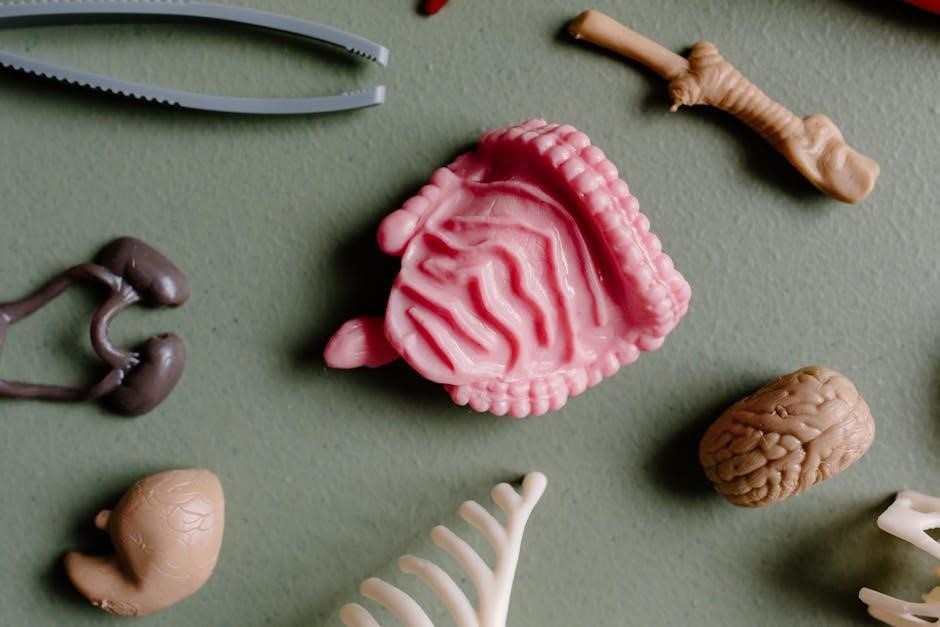
Cells, in turn, combine to create tissues – groups of similar cells performing specific functions. Four primary tissue types exist: epithelial, connective, muscle, and nervous. These tissues then cooperate to form organs, discrete structures with defined roles, such as the heart or lungs.
Organ systems consist of interacting organs working together for a common purpose, like the cardiovascular system. Finally, the organismal level represents the complete living being.
Lab manuals, such as Marieb’s, often emphasize this organization through dissection and observation. Resources available on platforms like Abebooks and Amazon provide visual aids and practical exercises to reinforce these concepts. The fetal pig serves as an excellent model for illustrating these levels, allowing students to trace structural organization from cells to systems. A solid grasp of these levels is crucial for comprehending physiological processes.
III. Basic Life Processes
Maintaining life requires a suite of coordinated processes. Metabolism, encompassing all chemical reactions, is central, including catabolism (breaking down substances) and anabolism (building up substances). Responsiveness allows organisms to detect and react to changes in their environment.
Movement, whether internal (like blood circulation) or external (like walking), is a defining characteristic. Growth involves an increase in size, while reproduction ensures the continuation of the species. Differentiation is the process where cells become specialized for specific functions.
Crucially, organisms must maintain homeostasis – a stable internal environment despite external fluctuations. This involves intricate feedback mechanisms.
Anatomy and physiology lab manuals, such as those featuring fetal pig dissections (available on Abebooks and Amazon), demonstrate these processes in action. Observing organ systems – cardiovascular, respiratory, digestive – reveals how they contribute to maintaining life. These resources provide hands-on experience, solidifying understanding beyond theoretical concepts. The study of these processes is essential for comprehending health and disease, and the lab component is vital for practical application.
IV. Anatomical Terminology
Precise communication in anatomy and physiology relies on a standardized terminology. Anatomical position – standing erect, feet slightly apart, palms facing forward – serves as the reference point. Directional terms, like superior (above) and inferior (below), describe relative positions.
Regional terms divide the body into specific areas, such as the cephalic (head) and abdominal regions. Planes – sagittal, frontal, and transverse – are imaginary lines used to section the body for viewing internal structures. Understanding these planes is crucial for interpreting medical imaging.
Body cavities, including the dorsal (protective) and ventral (visceral) cavities, house organs. Prefixes and suffixes are used to build anatomical terms, aiding in comprehension. For example, “cardio-” refers to the heart.

Lab manuals, like Marieb’s (found on Abebooks), reinforce these terms through dissection and labeling exercises. Visualizing structures in fetal pigs, or through images on Amazon, helps solidify understanding. Mastering anatomical terminology is fundamental for accurately describing anatomical structures and physiological processes, and is a cornerstone of the study.
V. Regional Anatomy Overview
Regional anatomy examines the body area by area, integrating structures within specific regions. This approach begins with a systematic study of the head, encompassing the skull, face, and brain. Next, the neck is explored, focusing on muscles, vessels, and nerves. The thorax, or chest, reveals the heart, lungs, and associated structures.
The abdomen houses digestive organs, while the pelvis contains reproductive and urinary systems. Upper and lower limbs are studied individually, detailing bones, muscles, and vasculature. This regional organization facilitates understanding how structures interact within a defined space.
Lab manuals, such as those featuring fetal pig dissections (available on Abebooks and Goodreads), provide hands-on experience. Dissection allows students to visualize the spatial relationships between organs. Resources on Amazon offer supplementary images and diagrams.
Understanding regional anatomy is crucial for clinical applications, aiding in diagnosis and treatment. It provides a framework for comprehending complex anatomical relationships and is reinforced through practical exercises within the lab setting, building a strong foundation for further study.
VI. Cell Structure and Function
Cells are the basic structural and functional units of the human body. Each cell comprises a plasma membrane, cytoplasm, and a nucleus. The plasma membrane regulates substance passage, while the cytoplasm houses organelles.
Key organelles include the mitochondria (energy production), ribosomes (protein synthesis), endoplasmic reticulum (transport), Golgi apparatus (processing & packaging), and lysosomes (waste disposal). The nucleus contains DNA, the genetic blueprint.
Cellular functions encompass metabolism, growth, reproduction, and responsiveness. Understanding these functions is vital for comprehending overall body physiology. Lab manuals, like Marieb’s (found on Abebooks), often include microscopic observations of cell structures.
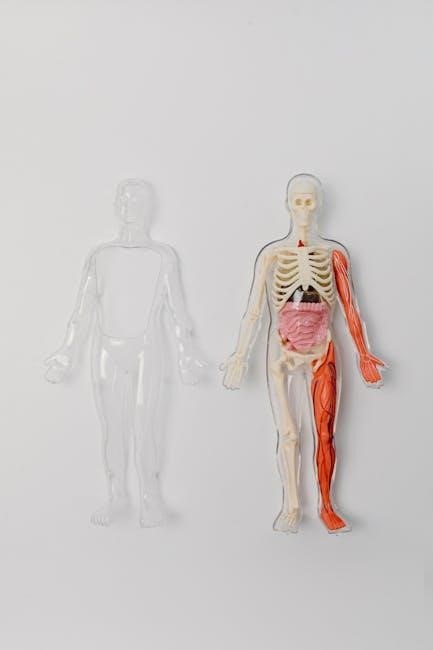
These manuals aid in identifying organelles and understanding their roles. Practical exercises, coupled with resources from Amazon, enhance comprehension. Studying cell structure provides a foundation for understanding tissue and organ systems. The interplay between structure and function at the cellular level is a core principle of anatomy and physiology.
VII. Chemical Basis of Life
Life is fundamentally a chemical process. The human body relies on specific chemical compounds for structure and function. Key biomolecules include water, carbohydrates, lipids, proteins, and nucleic acids.
Water constitutes a significant portion of the body, acting as a solvent and participating in reactions. Carbohydrates provide energy, while lipids store energy and form cell membranes. Proteins perform diverse roles, from enzymes to structural components. Nucleic acids (DNA & RNA) carry genetic information.
Ions like sodium, potassium, and calcium are crucial for nerve impulses and muscle contraction. pH balance is vital for enzyme activity. Lab manuals, such as those available on Abebooks, often include experiments demonstrating chemical principles.
These experiments might involve testing pH levels or identifying organic molecules. Resources from Amazon can supplement understanding. A grasp of basic chemistry is essential for comprehending physiological processes. The chemical composition of the body dictates its capabilities and limitations, forming the bedrock of anatomical and physiological study.
VIII. Tissue Types
Human tissues are collections of similar cells performing specific functions. There are four primary tissue types: epithelial, connective, muscle, and nervous. Understanding these tissues is fundamental to anatomy and physiology.
Epithelial tissue covers surfaces and forms linings, providing protection, secretion, and absorption. Connective tissue supports, connects, and separates different tissues and organs, including bone, cartilage, and blood.
Muscle tissue is responsible for movement, categorized into skeletal, smooth, and cardiac types. Nervous tissue transmits signals throughout the body, enabling communication and control.
Lab manuals, like Marieb’s, often feature microscopic examination of these tissues. Resources on Abebooks and Amazon provide visual aids and detailed descriptions. Dissections, such as those using fetal pigs, demonstrate tissue organization within organs.
Identifying tissue types under a microscope is a key lab skill. Understanding their structure-function relationships is crucial for comprehending organ systems. These tissues work in concert to maintain homeostasis and enable bodily functions, forming the building blocks of the human body.
IX. Epithelial Tissue
Epithelial tissue forms coverings and linings throughout the body, serving crucial protective, secretory, and absorptive roles. It’s characterized by closely packed cells with minimal extracellular matrix.
Types include squamous (flat), cuboidal (cube-shaped), and columnar (column-shaped), further classified by layering – simple (single layer) or stratified (multiple layers). These variations dictate specific functions.
Simple squamous epithelium facilitates diffusion in the lungs, while stratified squamous epithelium provides abrasion resistance in the skin. Simple columnar epithelium lines the digestive tract, aiding absorption, and often features microvilli to increase surface area.
Lab manuals, such as those by Marieb available on Abebooks and Amazon, emphasize microscopic identification of these tissue types. Fetal pig dissections demonstrate epithelial linings within organs.
Understanding epithelial tissue is vital for comprehending how the body interacts with its environment. Recognizing the structural adaptations related to function is a key learning objective. These tissues are fundamental to maintaining homeostasis and protecting underlying structures.
X. Connective Tissue
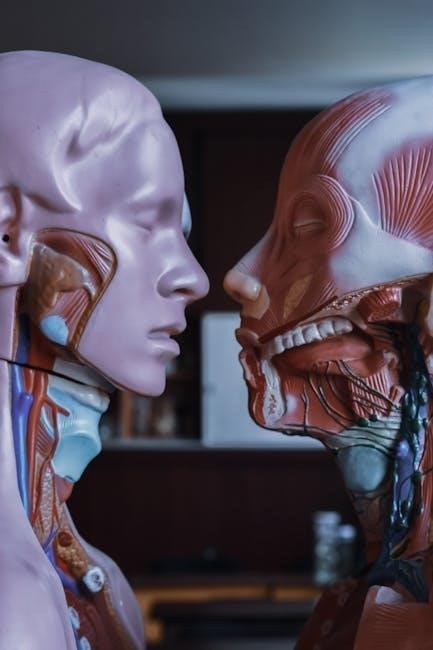
Connective tissue is the most abundant and widely distributed tissue type in the body, providing support, connection, and protection for other tissues and organs. Unlike epithelial tissue, it’s characterized by a significant extracellular matrix.
Major classes include connective tissue proper (loose and dense), supporting connective tissue (cartilage and bone), and fluid connective tissue (blood). Each class exhibits unique structural features and functions.
Loose connective tissue, like areolar tissue, cushions organs, while dense connective tissue, such as tendons and ligaments, provides strong attachments. Cartilage offers flexible support, and bone provides rigid support and mineral storage.
Lab manuals, including those utilizing fetal pig specimens as detailed on Abebooks, guide students in identifying these tissues microscopically. Observing the matrix composition – fibers like collagen and elastin – is crucial.
Understanding connective tissue is essential for grasping the body’s structural framework. The interplay between cells and the extracellular matrix determines tissue properties. Resources on Amazon and through Marieb’s materials aid in mastering these concepts.
XI. Muscle Tissue
Muscle tissue is specialized for contraction, enabling movement. There are three main types: skeletal muscle, smooth muscle, and cardiac muscle. Each type differs in structure, function, and control.

Skeletal muscle is attached to bones, responsible for voluntary movements. It appears striated under a microscope due to the arrangement of contractile proteins. Smooth muscle, found in the walls of internal organs, controls involuntary movements like digestion.
Cardiac muscle, exclusive to the heart, exhibits striations and involuntary control, ensuring rhythmic heartbeats. Understanding the microscopic anatomy of each type is vital.
Human Anatomy & Physiology lab manuals, often featuring fetal pig dissections (as found on Abebooks), provide hands-on experience in identifying these muscle tissues. Observing fiber arrangements and cellular structures is key.
Resources like Marieb’s lab manuals, available through Amazon, guide students in differentiating muscle types. Learning about muscle contraction mechanisms and their physiological roles is fundamental to understanding bodily functions. These materials offer a comprehensive approach to mastering muscle tissue identification and function.
XII. Nervous Tissue
Nervous tissue forms the brain, spinal cord, and nerves, responsible for rapid communication throughout the body. Its primary cells are neurons and neuroglia. Neurons transmit electrical signals, while neuroglia support and protect neurons.
Neurons consist of a cell body, dendrites (receiving signals), and an axon (transmitting signals). Synapses are junctions where signals pass between neurons. Understanding neuronal structure is crucial for comprehending nervous system function.
Human Anatomy & Physiology lab manuals, like those utilizing fetal pig specimens (available on Abebooks), offer opportunities to observe nervous system structures. Identifying the brain, spinal cord, and peripheral nerves is a key learning objective.
Resources such as Marieb’s lab manual, found on Amazon, provide detailed illustrations and exercises for studying nervous tissue. Students learn to differentiate between gray and white matter, and to recognize various neuroglial cells.
These practical exercises, combined with theoretical knowledge, build a strong foundation in neuroanatomy and physiology. Mastering nervous tissue identification and function is essential for understanding how the body responds to stimuli and maintains homeostasis.
XIII. Integumentary System
The integumentary system, encompassing the skin, hair, and nails, serves as the body’s protective outer layer. It regulates temperature, synthesizes vitamin D, and provides sensory information. The skin comprises the epidermis and dermis, each with distinct layers and functions.
The epidermis, the outermost layer, is primarily composed of epithelial tissue, providing a barrier against the environment. The dermis, beneath the epidermis, contains connective tissue, blood vessels, nerves, and glands. Accessory structures like hair follicles and sweat glands are also integral components.
Human Anatomy & Physiology lab manuals, often utilizing fetal pig models (sourced through Abebooks), may demonstrate analogous structures to human skin. While not identical, these models aid in understanding tissue organization.
Resources like Marieb’s lab manual, available on Amazon, offer detailed illustrations and exercises for identifying skin layers and structures. Students learn to differentiate between thick and thin skin, and to recognize various skin glands.
Practical exercises, such as microscopic examination of skin samples, enhance understanding of tissue histology. Studying the integumentary system is crucial for comprehending wound healing, thermoregulation, and sensory perception.
XIV. Skeletal System
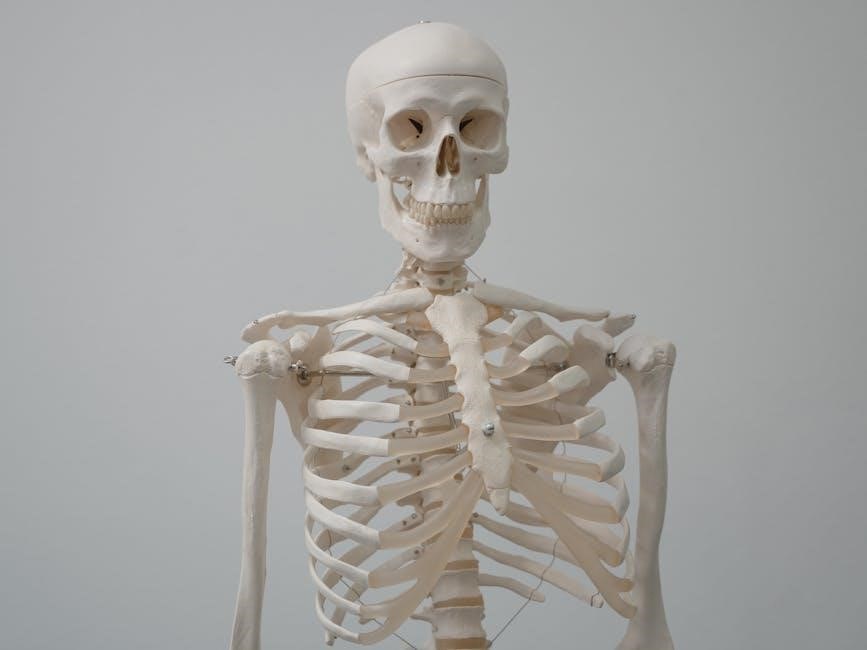
The skeletal system provides support, protection, and facilitates movement. It’s composed of bones, cartilage, ligaments, and joints. Bones are classified by shape – long, short, flat, irregular, and sesamoid – each adapted for specific functions.
Bone tissue itself consists of compact and spongy bone, with a complex microscopic structure. The skeletal system also plays a vital role in mineral storage (calcium and phosphorus) and blood cell formation (hematopoiesis). Understanding bone markings – processes, foramina, and fossae – is crucial for anatomical identification.
Human Anatomy & Physiology lab manuals, like those featuring fetal pig dissections (available on Abebooks), can illustrate skeletal structure principles, though direct comparison is limited. These models help visualize bone arrangements.
Resources such as Marieb’s lab manual, found on Amazon, provide detailed diagrams and exercises for identifying bones and their features. Students learn to classify joints based on structure and function – fibrous, cartilaginous, and synovial.
Lab activities often involve skeletal articulation studies and bone identification using models. Comprehending the skeletal system is fundamental to understanding biomechanics, posture, and common skeletal disorders.
XV. Bone Tissue and Structure
Bone tissue is a dynamic connective tissue, constantly remodeled throughout life. It comprises four types of cells: osteogenic cells, osteoblasts (bone-forming), osteocytes (mature bone cells), and osteoclasts (bone-resorbing). These cells work in concert to maintain bone homeostasis.
Compact bone, the dense outer layer, provides strength and protection. It’s organized into osteons, cylindrical structures containing central canals with blood vessels and nerves. Spongy bone, found internally, is lighter and contains trabeculae, creating spaces for bone marrow.
The extracellular matrix of bone consists of organic components (collagen fibers providing flexibility) and inorganic components (hydroxyapatite, providing hardness). This composition gives bone its unique properties.
Human Anatomy & Physiology lab manuals, such as those utilizing fetal pig models (available on Abebooks), demonstrate bone tissue organization, though mammalian skeletal differences exist. Marieb’s lab manual (Amazon) offers detailed microscopic slides for studying bone structure.
Lab exercises involve identifying bone cells under a microscope and analyzing bone tissue samples. Understanding bone structure is crucial for comprehending fracture healing, bone diseases like osteoporosis, and the skeletal system’s overall function.
XVI. Articulations (Joints)
Articulations, or joints, are points where bones meet, enabling movement and providing mechanical support. They are classified structurally (fibrous, cartilaginous, synovial) and functionally (synarthrosis – immovable, amphiarthrosis – slightly movable, diarthrosis – freely movable).
Fibrous joints, like sutures in the skull, are connected by dense connective tissue. Cartilaginous joints, such as intervertebral discs, use cartilage for connection. Synovial joints, the most common type, feature a joint cavity filled with synovial fluid, reducing friction.
Synovial joints include various subtypes: hinge (elbow), ball-and-socket (shoulder), pivot (radius-ulna), gliding (wrist), and saddle (thumb). Each allows specific movements.
Human Anatomy & Physiology lab manuals, often utilizing fetal pig dissections (Abebooks), demonstrate joint structures, though mammalian joint anatomy varies. Marieb’s lab manual (Amazon) provides illustrations and exercises for identifying joint types.
Lab activities involve dissecting joints, identifying ligaments and cartilage, and analyzing range of motion. Understanding joint structure and function is vital for comprehending movement, injury mechanisms, and conditions like arthritis. Practical application enhances learning.
XVII. Muscular System
The Muscular System is responsible for all movement, maintaining posture, and generating heat. It comprises three types of muscle tissue: skeletal, smooth, and cardiac. Skeletal muscle, attached to bones, enables voluntary movement. Smooth muscle, found in organ walls, controls involuntary functions like digestion. Cardiac muscle forms the heart, responsible for pumping blood.
Skeletal muscles are composed of muscle fibers bundled together. Contraction occurs through a complex process involving actin and myosin filaments. Understanding muscle anatomy – origin, insertion, action – is crucial.
Human Anatomy & Physiology lab manuals, such as those featuring fetal pig dissections (Abebooks), allow students to identify major skeletal muscles and observe their attachments. Marieb’s lab manual (Amazon) provides detailed diagrams and exercises.
Lab activities include muscle dissection, identifying muscle fiber arrangements, and examining microscopic muscle tissue slides. Studying muscle physiology, including contraction mechanisms, is also essential.
Practical experience reinforces theoretical knowledge, enabling students to correlate muscle structure with function. This system’s study is vital for understanding movement, exercise physiology, and muscular disorders.
XVIII. Muscle Contraction Physiology
Muscle contraction is a complex process converting chemical energy into mechanical force. It begins with nerve stimulation at the neuromuscular junction, releasing acetylcholine. This triggers an action potential traveling along the muscle fiber.
The action potential causes the release of calcium ions from the sarcoplasmic reticulum. Calcium binds to troponin, exposing myosin-binding sites on actin filaments. Myosin heads then attach to actin, forming cross-bridges.
Using energy from ATP, myosin heads pivot, pulling actin filaments closer – the sliding filament theory. This shortens the sarcomere, the basic contractile unit of muscle. Relaxation occurs when nerve stimulation ceases, calcium is reabsorbed, and cross-bridges detach.
Human Anatomy & Physiology lab manuals (Marieb, Abebooks) often include exercises demonstrating these processes. Fetal pig dissections can illustrate muscle attachments and lever systems involved in movement.
Labs may involve electromyography (EMG) to measure electrical activity during contraction, or analyzing the effects of different stimuli on muscle force. Understanding ATP’s role and the influence of factors like fatigue is crucial. These practical experiences solidify comprehension of this fundamental physiological process.
XIX. Nervous System
The nervous system is the body’s rapid control center, coordinating actions and responses. It comprises the brain, spinal cord, and peripheral nerves. Functionally, it’s divided into central (CNS) and peripheral (PNS) nervous systems.
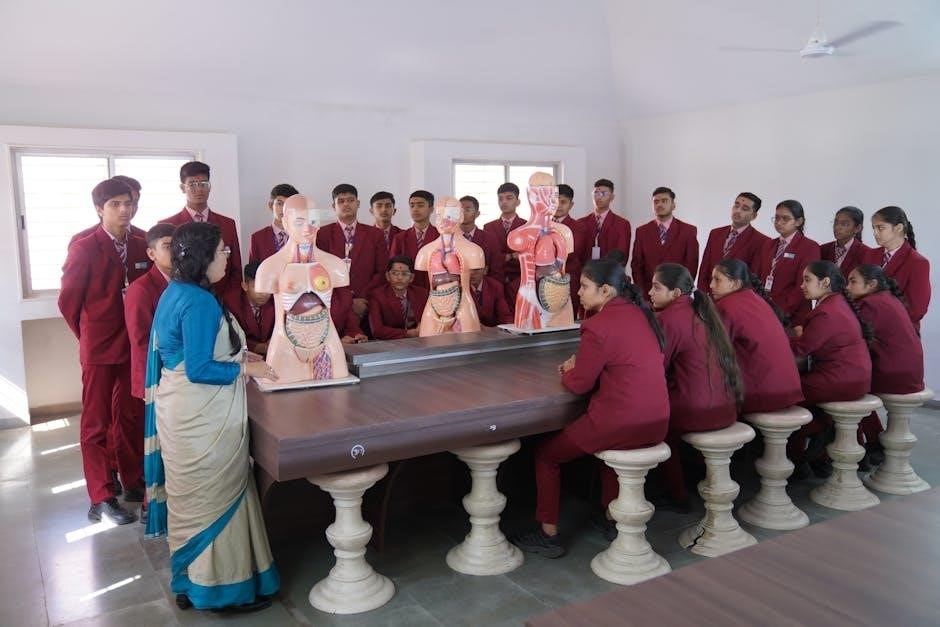
Human Anatomy & Physiology lab manuals, like those by Marieb (available on Abebooks and Amazon), emphasize both structure and function. Dissections, though often utilizing fetal pigs, illustrate nerve pathways and brain anatomy. These labs help visualize the complex organization.
Labs often involve identifying cranial nerves, tracing spinal nerve pathways, and examining the structure of the brain. Students may explore reflexes, demonstrating the speed of neural transmission. Understanding the role of neurons, synapses, and neurotransmitters is key.
Practical exercises might include testing reaction times, analyzing EEG patterns, or investigating the effects of drugs on nerve function. Resources like online videos (YouTube links found in search results) can supplement lab work.
The nervous system’s intricate network enables sensation, movement, thought, and countless other vital processes. Mastering its fundamentals is essential for understanding overall body function.
XX. Brain Anatomy
The brain, the central control of the nervous system, is remarkably complex. Its major regions – cerebrum, cerebellum, and brainstem – each have distinct functions. The cerebrum governs higher-level thought, while the cerebellum coordinates movement and balance.
Human Anatomy & Physiology lab manuals, such as Marieb’s (sourced from Abebooks and Amazon), provide detailed explorations of brain structures. While fetal pig dissections offer a foundational understanding, labs also utilize models and diagrams to illustrate human brain anatomy.
Labs focus on identifying lobes of the cerebrum (frontal, parietal, temporal, occipital) and their associated functions. Students learn to recognize key structures like the corpus callosum, thalamus, and hypothalamus. The brainstem, crucial for life support, is also examined.
Practical exercises may involve tracing neural pathways, identifying areas responsible for specific sensory or motor functions, and understanding the impact of brain damage. Online resources, like YouTube videos, can enhance visualization.
Understanding the brain’s intricate anatomy is vital for comprehending neurological disorders and the basis of human cognition. Lab work provides a crucial hands-on experience.
XXI. Spinal Cord and Peripheral Nerves
The spinal cord serves as a vital communication pathway between the brain and the body. Protected within the vertebral column, it transmits sensory information and motor commands. Extending from the spinal cord are the peripheral nerves, branching throughout the body to reach muscles, organs, and sensory receptors.
Human Anatomy & Physiology lab manuals, including those featuring fetal pig dissections (available on Abebooks), aid in visualizing these structures. While pig anatomy differs, it provides a foundational understanding of nerve organization.

Labs typically involve identifying the major regions of the spinal cord – cervical, thoracic, lumbar, sacral, and coccygeal – and tracing the pathways of spinal nerves. Students learn to differentiate between dorsal and ventral roots, and the role of the dorsal root ganglia.
Practical exercises may include examining nerve plexuses (brachial, lumbar, sacral) and identifying the nerves that innervate specific body regions. Understanding the organization of peripheral nerves is crucial for diagnosing nerve injuries.
Resources like online videos can supplement lab work, providing dynamic visualizations of nerve conduction. Mastering spinal cord and peripheral nerve anatomy is essential for understanding the nervous system’s overall function.
XXII. Cardiovascular System
The cardiovascular system, encompassing the heart, blood vessels, and blood, is responsible for transporting oxygen, nutrients, hormones, and removing waste products. Understanding its anatomy and physiology is fundamental in Human Anatomy & Physiology courses.
Lab manuals, such as those by Marieb (available on Abebooks and Amazon), often include dissections to visualize the heart’s chambers, valves, and major vessels. While fetal pig hearts are used, they provide a valuable comparative model.
Labs typically involve identifying the aorta, vena cava, pulmonary artery, and pulmonary veins. Students learn to trace the flow of blood through the heart and understand the cardiac cycle. Microscopic examination of blood samples reveals different cell types – erythrocytes, leukocytes, and platelets.
Activities may include measuring blood pressure and heart rate, and analyzing the effects of exercise on cardiovascular function. Understanding vessel structure – arteries, veins, and capillaries – is also crucial.
Online resources and videos can enhance learning, demonstrating blood flow dynamics and the electrical conduction system of the heart. A solid grasp of the cardiovascular system is vital for comprehending overall body homeostasis.
Related Posts

how to cite lab manual
Struggling with citing your lab manual? MojoPet’s guide makes it a breeze! Get accurate citations & boost your grade. Simple, fast, & reliable. ✨
human anatomy and physiology laboratory manual answer key pdf
Struggling with your Anatomy & Physiology lab? Find the answers you need! This manual helps you master key concepts & lab skills. Get the PDF now!

amvets ladies auxiliary officers manual
Need a handy guide for running a smooth AMVETS Ladies Auxiliary? This manual covers everything! Download now & empower your leadership. Get organized today!