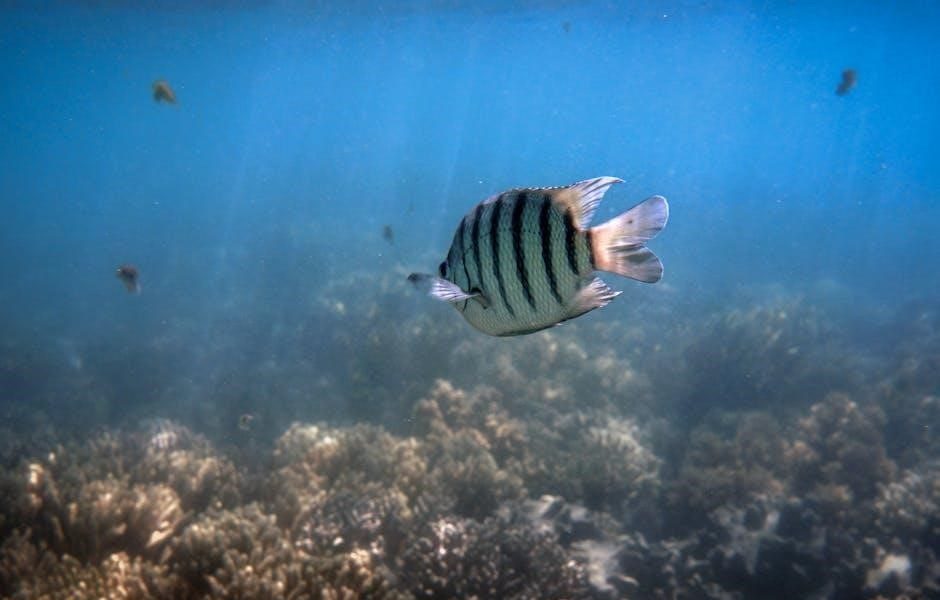
hawaii reef fish guide
Hawaii Reef Fish Guide: A Comprehensive Plan
Navigating Hawaiian reef fish identification presents unique challenges, due to species diversity and varying photographic conditions; however, resources like Hoover’s guide offer substantial aid.
Hawaii’s reefs teem with an astonishing array of fish species, exceeding what any single guide can fully capture in images. Identifying these vibrant creatures isn’t always straightforward, as appearance shifts dramatically between professional photography and casual snorkeling observations. The sheer number of species—hundreds in total—complicates photo-based identification, making it notoriously unreliable without supplemental resources. Guides like Hoover’s offer a strong foundation, blending comprehensive coverage with engaging anecdotes and trivia, but pairing it with online tools is crucial for accurate results.
The Importance of Reef Ecosystems in Hawaii
Hawaiian reef ecosystems are biodiversity hotspots, intrinsically linked to the health of the surrounding ocean and islands. Reef fish play a vital role in maintaining this delicate balance, controlling algae growth and supporting the food web. Protecting these ecosystems isn’t merely about preserving beauty; it’s about safeguarding essential ecological functions and the livelihoods dependent upon them. Understanding fish identification is a crucial first step in effective conservation efforts.
Challenges in Identifying Hawaiian Reef Fish
Accurate Hawaiian reef fish identification proves surprisingly difficult, even with guides, due to the sheer number of species and significant visual variations. Professional underwater photography, utilizing strobes, dramatically alters fish appearance compared to natural light snorkeling views. Relying solely on photos is often unreliable; supplemental resources and careful observation are essential for confident identification.
Color Variation and Lighting Effects
Fish coloration shifts dramatically with depth and lighting, impacting identification. Bright strobe flashes used in professional underwater photography can saturate colors, creating a different appearance than observed during snorkeling in natural sunlight. This discrepancy makes photo-based identification tricky, requiring consideration of these effects and comparison across multiple sources.
Juvenile vs. Adult Forms
Many Hawaiian reef fish exhibit significant morphological changes during development, presenting identification hurdles. Juvenile coloration and patterns often differ drastically from adults of the same species. Relying solely on images of adult forms can lead to misidentification; therefore, understanding these life-stage variations is crucial for accurate species recognition in the field.
Popular Fish Identification Resources
Several resources aid in identifying Hawaii’s diverse reef fish. Hoover’s Guide to Hawaiian Reef Fishes is a comprehensive option, lauded for its extensive photos, anecdotes, and trivia. Randall’s Reef Fish Guides are also highly regarded, utilizing anatomical keys for identification. Supplementing these books with online resources like Google Images and reliable websites enhances accuracy.
Hoover’s Guide to Hawaiian Reef Fishes
Hoover’s Guide stands out as a remarkably comprehensive resource for Hawaiian reef fish identification. It’s celebrated not only for its extensive photographic collection but also for the inclusion of engaging quirks, fascinating anecdotes, and intriguing trivia about each species. This guide proves invaluable for both beginners and seasoned enthusiasts.
Randall’s Reef Fish Guides
Randall’s guides are highly regarded for their detailed use of anatomical keys in fish identification. These keys focus on readily observable physical traits, aiding users in narrowing down possibilities. Supplementing these guides with online resources like Google Images and reliable websites significantly enhances photo identification accuracy, bridging the gap between book and real-world observation.
Common Hawaiian Reef Fish Families
Hawaii’s reefs teem with diverse fish families, each exhibiting unique characteristics. Butterflyfish (Chaetodontidae) display vibrant patterns, while Surgeonfish (Acanthuridae) possess scalpel-like spines. Parrotfish (Scaridae) are known for beak-like mouths and Triggerfish (Balistidae) for their bold colors and defensive capabilities; understanding these families is crucial for identification.
Butterflyfish (Chaetodontidae)
Butterflyfish are renowned for their striking, often intricate patterns and laterally compressed bodies. These reef inhabitants primarily feed on coral polyps and small invertebrates, displaying specialized mouthparts for this purpose. Identifying species requires careful attention to color variations and fin markings, as juvenile forms differ significantly from adults.
Surgeonfish (Acanthuridae)
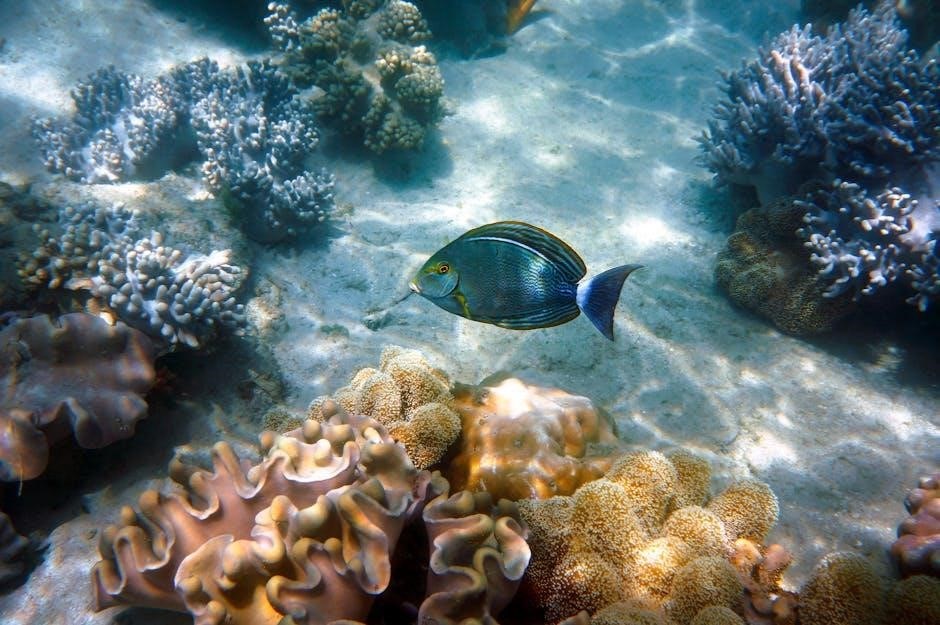
Surgeonfish, easily recognized by their scalpel-like spines near the tail, are crucial herbivores maintaining reef health. They graze on algae, preventing overgrowth on coral. Identifying surgeonfish involves noting body shape, color phases (initial, terminal), and spine number. Juvenile coloration often differs dramatically from mature adults, adding to identification complexity.
Parrotfish (Scaridae)
Parrotfish are vibrant, ecologically vital reef inhabitants known for their beak-like mouths used to scrape algae and coral. This feeding habit creates sand, contributing to beach formation! Identifying parrotfish requires observing their distinct mouth shape, color patterns—often changing with age—and body form. Initial and terminal phase coloration varies significantly within species.
Triggerfish (Balistidae)
Triggerfish are easily recognized by their robust bodies and the prominent, trigger-like spine on their dorsal fin. This spine can lock into an upright position as a defense mechanism. Hawaiian triggerfish exhibit bold patterns and colors, with variations between species and life stages. Observe their unique body shape and fin placement for accurate identification.
Iconic Hawaiian Reef Fish Species
Hawaii boasts several reef fish celebrated for their beauty and ecological roles. The Yellow Tang, a vibrant gold, is a common sight, while the Moorish Idol’s striking black, white, and yellow patterns captivate divers. The Raccoon Butterflyfish, with its distinctive mask-like markings, adds to the reef’s charm. These species exemplify Hawaii’s underwater biodiversity.
Yellow Tang (Zebrasoma flavescens)
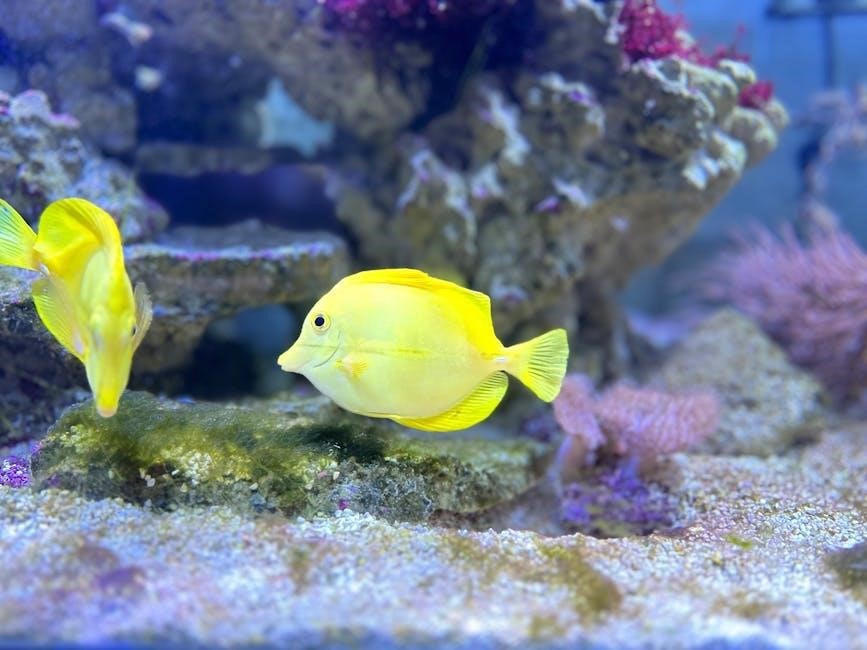
The Yellow Tang is arguably Hawaii’s most recognizable reef fish, displaying a brilliant, uniform yellow coloration throughout its body. These algae-grazers play a vital role in maintaining reef health. Commonly found in shallow reefs, they are a favorite among snorkelers and divers, adding a splash of color to the underwater landscape.
Moorish Idol (Zanclus cornutus)
The Moorish Idol is a strikingly beautiful, yet notoriously difficult-to-keep fish, famed for its dramatic black, white, and yellow striped pattern. Its elongated body and flowing dorsal fin make it instantly recognizable. Often seen picking at coral polyps, it requires specialized care in captivity, making it a challenging choice for aquarists.
Raccoon Butterflyfish (Chaetodon lunula)
The Raccoon Butterflyfish is a common sight on Hawaiian reefs, easily identified by its dark mask across the eyes and yellow tail. These fish are generally found in pairs, actively foraging for food amongst coral branches. They are relatively hardy and a favorite among snorkelers due to their bold patterns and curious nature.
Understanding Fish Behavior for Identification
Observing fish behavior significantly aids identification, beyond just physical characteristics. Recognizing feeding habits – what they eat and where – narrows possibilities. Territorial displays, like chasing or fin-flaring, are species-specific. Understanding these patterns, coupled with anatomical features, boosts accuracy, especially when visual clarity is limited underwater. Contextual clues are invaluable.
Feeding Habits and Associated Fish
Dietary preferences are key identifiers; some fish graze algae, others consume invertebrates, and some are predatory. Observing what a fish eats, and where, provides clues. Certain species aggregate around specific food sources, attracting associated fish. For example, parrotfish create algal lawns, attracting smaller grazers. Recognizing these feeding relationships aids accurate identification.
Territoriality and Display Patterns
Many Hawaiian reef fish exhibit strong territorial behaviors, defending feeding or breeding areas. Displays, like color changes or fin spreading, signal aggression or courtship. Understanding these patterns helps distinguish similar species. Some fish are solitary, while others form schools, influencing observed behaviors. Observing these interactions provides valuable identification clues in their natural habitat.
Key Anatomical Features for Identification
Precise observation of anatomical details is crucial for accurate fish identification. Body shape – elongated, compressed, or rounded – offers initial clues. Fin structure, including shape and ray counts, provides further differentiation. Examining mouth morphology, like dentition and position, aids species recognition. These features, combined with color patterns, form a robust identification framework.
Body Shape and Fin Structure
Distinguishing body shapes – elongated like eels, laterally compressed like angelfish, or rounded like pufferfish – narrows identification possibilities. Fin structure, encompassing shape, size, and ray counts, is equally vital. Note dorsal, pectoral, and anal fin characteristics. These anatomical details, when combined with coloration, provide essential clues for accurate species determination.
Mouth Morphology and Dentition
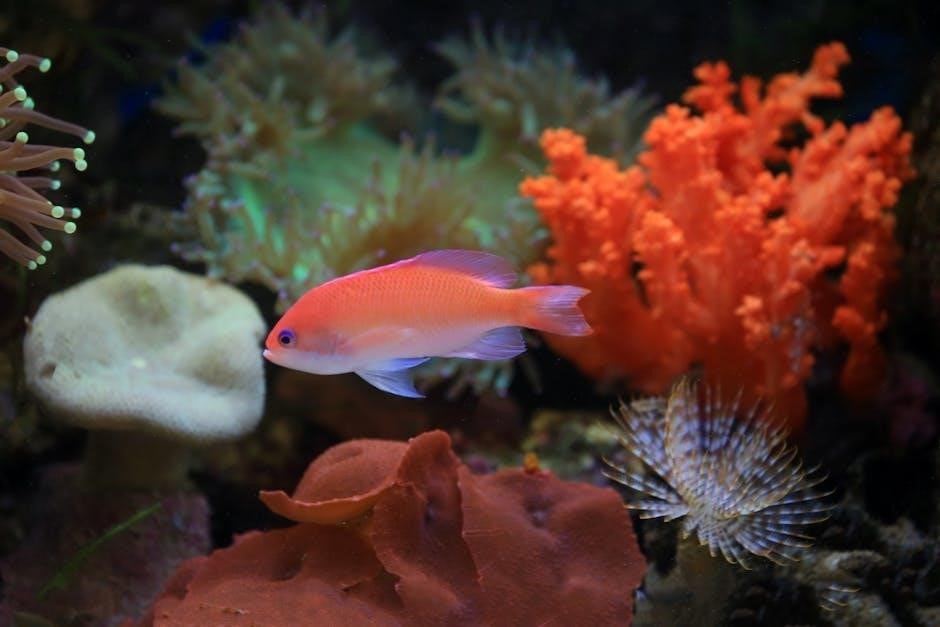
Examining a fish’s mouth shape – protrusible, terminal, or superior – reveals feeding strategies. Dentition, or tooth structure, is crucial; some have brush-like teeth for scraping algae, while others possess sharp teeth for predation. Observing these features, alongside jaw size and lip structure, significantly aids in identifying Hawaiian reef fish species.
Utilizing Online Resources for Fish ID
Digital platforms greatly enhance Hawaiian reef fish identification efforts. FishBase provides extensive species profiles, while Reef Life Survey offers valuable photographic data and distribution maps. Supplementing field guides with these online tools allows for cross-referencing and verification, improving accuracy when identifying diverse species encountered during snorkeling or diving excursions.
FishBase
FishBase is a globally recognized online database offering comprehensive information on fish species, including those found in Hawaiian reefs. It details taxonomy, distribution, biology, and ecological characteristics. Users can access detailed species profiles, photographs, and scientific literature, making it an invaluable resource for researchers and enthusiasts alike seeking accurate identification data.
Reef Life Survey
Reef Life Survey (RLS) provides valuable data on reef fish communities globally, including Hawaii, through standardized underwater visual census techniques. This citizen science initiative allows divers to contribute to long-term monitoring efforts, offering insights into fish abundance, diversity, and habitat associations. RLS data aids conservation and informs management decisions regarding reef ecosystems.
Tips for Successful Reef Fish Photography
Capturing stunning reef fish images requires careful planning. Utilize appropriate camera settings for underwater conditions, prioritizing fast shutter speeds and wide apertures. Employing strobes minimizes color distortion, but be mindful of ethical considerations – avoid disturbing fish or damaging the reef. Patience and respectful observation are key to exceptional results.
Camera Settings for Underwater Photography
Optimal settings depend on depth and light; Prioritize aperture priority mode with a wide aperture (f/2.8 ౼ f/5.6) for shallow depth of field. Use a fast shutter speed (1/125s or faster) to freeze motion. White balance should be set to underwater or custom. High ISO settings may be needed in darker environments, but manage noise carefully.
Ethical Considerations When Photographing Fish
Minimize disturbance to the reef ecosystem. Avoid touching corals or chasing fish, as this causes stress; Refrain from using flash directly on sensitive species, and maintain a respectful distance. Never bait fish for photos. Prioritize the well-being of marine life over capturing the perfect image; responsible photography is crucial.
Conservation Status of Hawaiian Reef Fish
Hawaiian reef fish face increasing threats from habitat loss, pollution, and climate change impacts like coral bleaching. Overfishing and invasive species also contribute to declining populations. Sustainable practices, such as responsible tourism and reduced pollution, are vital for preserving these fragile ecosystems and ensuring the future of Hawaii’s vibrant reef fish.
Threats to Reef Fish Populations
Numerous factors endanger Hawaiian reef fish, including coral reef degradation from bleaching events and pollution. Overfishing disrupts the food web, while invasive algae smother crucial habitats. Coastal development and runoff introduce harmful substances, impacting fish health and reproduction. Climate change exacerbates these issues, demanding urgent conservation action.
Sustainable Practices for Reef Conservation
Protecting Hawaiian reef fish requires multifaceted approaches. Supporting sustainable fisheries and reducing pollution are vital. Responsible tourism, including reef-safe sunscreen use, minimizes impact. Active coral restoration projects and marine protected areas offer refuge. Community involvement in monitoring and conservation efforts ensures long-term reef health and resilience.
Where to See Hawaiian Reef Fish
Hawaii offers incredible opportunities for observing vibrant reef fish. Popular snorkeling and diving locations include Hanauma Bay, Molokini Crater, and Kealakekua Bay. Visibility is generally best during summer months (May-October) when ocean conditions are calmer. Remember to choose responsible tour operators committed to reef conservation for an enriching experience.
Popular Snorkeling and Diving Locations
Hawaii boasts world-class spots for underwater exploration. Hanauma Bay (Oahu) is famed for calm, clear waters and abundant fish. Molokini Crater (Maui) offers exceptional visibility and diverse marine life. Kealakekua Bay (Big Island) provides historical significance alongside vibrant reefs. Other notable sites include Poipu Beach (Kauai) and Kapalua Bay (Maui).
Best Times of Year for Viewing Fish
Optimal viewing occurs during Hawaii’s warmer months, typically May through October. Summer offers calmer seas and increased fish activity due to breeding seasons. Winter (November-April) can bring larger swells, impacting visibility. However, humpback whale migrations coincide, adding another spectacle. Consistent sunshine and reduced rainfall enhance underwater conditions throughout the summer and early fall.
Safety Precautions for Reef Exploration
Prioritize reef safety by avoiding contact with coral and marine life. Be mindful of currents and surge, and never snorkel or dive alone. Respect the environment – do not touch, feed, or harass fish. Watch for potentially hazardous creatures like urchins and stonefish. Practice buoyancy control to prevent reef damage, and heed local warnings.
Avoiding Harmful Marine Life
Be cautious of potentially dangerous marine life while exploring Hawaiian reefs. Avoid touching or approaching creatures like cone snails, scorpionfish, and moray eels. Observe from a safe distance, and never attempt to handle any marine animal. Recognize the signs of venomous stings and bites, and know basic first aid procedures.
Respecting the Reef Environment
Protect the delicate Hawaiian reef ecosystem during your explorations. Avoid standing on coral, as it’s easily damaged and slow to recover. Refrain from stirring up sediment, and never collect shells or marine life as souvenirs. Practice responsible snorkeling and diving, maintaining buoyancy control and avoiding contact with the reef structure.
Advanced Fish Identification Techniques
For precise identification, explore dichotomous keys, systematically narrowing possibilities based on observable traits. Understanding phylogenetic relationships – how species are evolutionarily connected – provides context. Randall’s guides utilize anatomical features; supplementing with online resources and careful observation of subtle differences enhances accuracy, moving beyond simple photo comparisons.
Using Dichotomous Keys
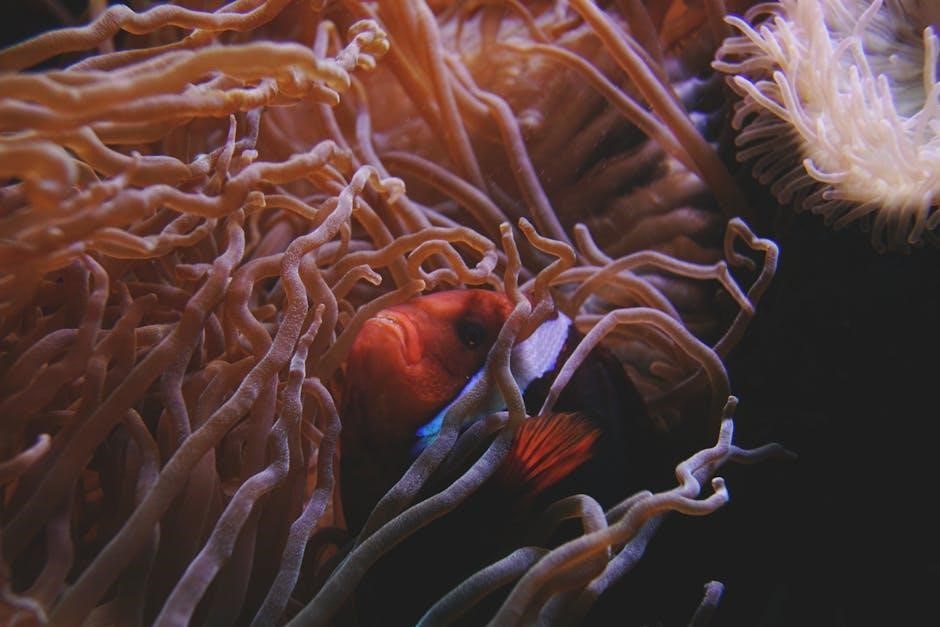
Dichotomous keys present a series of paired choices, leading to identification through progressively refined characteristics. Randall’s reef fish guides effectively employ this method, focusing on anatomical traits. Carefully consider each option, even subtle differences, and proceed systematically. Supplementing with images and cross-referencing ensures accuracy, overcoming challenges posed by variable lighting and coloration.
Understanding Phylogenetic Relationships
Exploring evolutionary connections enhances fish identification, revealing shared ancestry and explaining morphological similarities. Recognizing fish families – like Butterflyfish or Surgeonfish – provides a foundational understanding. Phylogenetic trees illustrate these relationships, aiding in distinguishing closely related species. This deeper knowledge complements anatomical key usage, improving accuracy and appreciation of Hawaiian reef biodiversity.
Contributing to Citizen Science Projects
Participating in reef monitoring programs actively supports Hawaiian reef fish conservation. Reporting sightings, even seemingly common species, provides valuable data on distribution and abundance. Citizen science initiatives empower enthusiasts to contribute meaningfully to research efforts. Your observations help track changes, assess health, and inform effective management strategies for these fragile ecosystems.
Reporting Fish Sightings
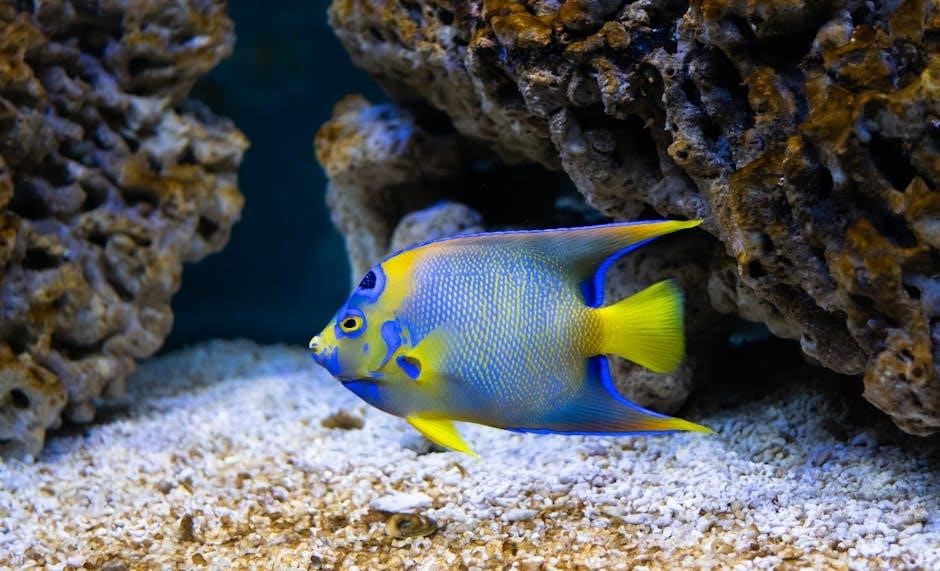
Documenting your underwater encounters is crucial for tracking reef fish populations. Share detailed observations – species (if known), location, date, and clear photographs – with relevant organizations. These records contribute to long-term monitoring efforts, helping scientists understand distribution shifts and population trends. Even seemingly common sightings provide valuable baseline data for conservation initiatives.
Participating in Reef Monitoring Programs
Engage directly in Hawaiian reef conservation by joining established monitoring programs. These initiatives often involve guided surveys, data collection on fish abundance and health, and habitat assessments. Your participation provides valuable assistance to researchers and resource managers, bolstering efforts to protect these fragile ecosystems. Training is typically provided, making it accessible to all skill levels.
Future of Hawaiian Reef Fish Research
The future hinges on understanding climate change impacts and bolstering conservation. Research will focus on coral bleaching resilience, ocean acidification effects on fish behavior, and invasive species management. Continued monitoring, genetic studies, and collaborative efforts are crucial for predicting changes and implementing effective strategies to safeguard Hawaii’s unique reef fish populations for generations to come.
Impact of Climate Change
Rising ocean temperatures and acidification pose significant threats. Coral bleaching events decimate habitats, impacting fish populations reliant on reefs for shelter and food. Changes in water chemistry disrupt fish development and behavior, while altered currents affect larval dispersal. These factors collectively jeopardize the biodiversity and resilience of Hawaiian reef ecosystems.
Ongoing Conservation Efforts
Numerous initiatives aim to protect Hawaiian reef fish and their habitats. These include marine protected areas, fishing regulations, and coral restoration projects. Community-based monitoring programs engage citizens in data collection, while research focuses on climate change impacts and disease resistance. Sustainable tourism practices also play a vital role in minimizing human impact.
Related Posts

birkenstock size guide uk
Struggling with Birkenstock sizing? Our UK guide helps you nail the perfect fit for ultimate comfort! Don’t guess, measure & shop with confidence. Birkenstock size guide.

texas life and health insurance exam study guide pdf free
Ace your Texas Life and Health Insurance Exam with our free study guide. Comprehensive tips, practice questions, and expert advice. Download now!
the crucible anticipation guide
Dive into Arthur Miller’s ‘The Crucible’ with our anticipation guide! Debate themes, predict outcomes, and get totally hooked before page one. Let’s get thinking!